
The global kitchenware industry has experienced significant growth in recent years, driven by evolving consumer lifestyles, the rise of home cooking, and the expansion of e-commerce. From premium cookware to everyday food storage solutions, consumers now expect products that are not only functional but also safe, durable, and aesthetically pleasing.
At the same time, brands, importers, and retailers are facing increasing pressure to meet stringent safety standards and regulatory requirements. As kitchenware products come into direct contact with food, any quality issue can quickly escalate into serious health risks, product recalls, and reputational damage. This makes effective quality control more critical than ever.
What Falls Under Kitchenware?
Kitchenware is a broad category that includes a wide range of products used in food preparation, cooking, serving, and storage. Generally, they are considered as food contact materials (FCMs). Key categories include:
- Cookware: Pots, pans, baking trays, and oven-safe dishes
- Food contact items: Utensils, cutting boards, and mixing tools
- Tableware: Plates, bowls, cups, and serving dishes
- Storage products: Lunch boxes, containers, and reusable bottles
Each category comes with its own functional requirements and risk factors, making it essential to apply corresponding quality control solutions.
Common Materials Used in Kitchenware
Kitchenware products are manufactured using a variety of materials, each with distinct properties and associated risks. Here are the most common materials used in kitchenware, materials characteristics, and examples of kitchenware made from these materials.
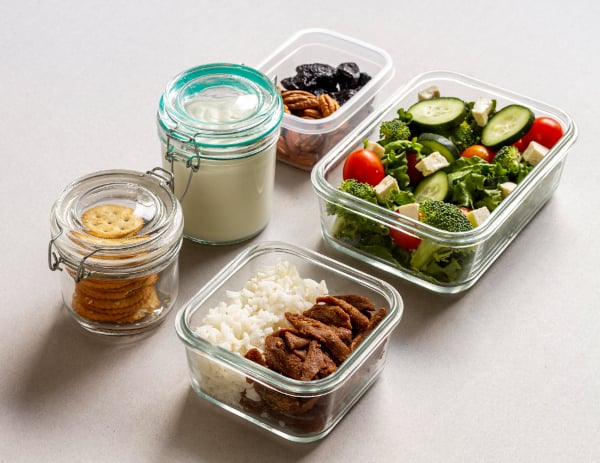
Non-metal Materials
- Plastics (e.g., PP, PET) and silicone: Lightweight and versatile but may pose risks related to chemical migration or heat resistance. They are usually used in food storage containers, party plates, and party cups.
- Glass: Non-reactive and easy to clean, but prone to breakage and thermal shock. They are commonly used in pots, bowls, and food storage containers.
- Ceramics: Popular for tableware, though quality depends heavily on glazing and firing processes. Usually used in plates, bowls, and cups.
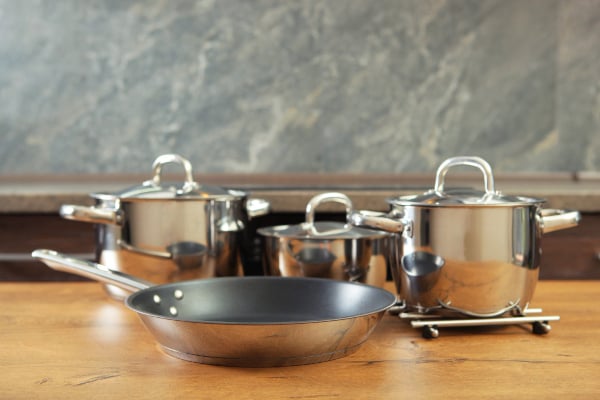
Metal Materials
- Stainless steel: Durable and corrosion-resistant, widely used in cookware and utensils. Often used in pots, pans, and as the inner pots of the cookware or kitchen utensils.
- Aluminum (coated or anodized): Lightweight with good heat conductivity, but coating quality is critical. Also often used in pots, pans, and as the inner pots of the cookware or kitchen utensils.

Natural Materials
- Wood and bamboo: Eco-friendly options, but susceptible to moisture, mold, and hygiene concerns. Often used in cooking utensils like spoons, spatula, and chopsticks.
Understanding material characteristics is key to identifying potential risks and selecting appropriate testing methods.
Key Regulations and Compliance Requirements Related to Kitchenware
Kitchenware products must comply with food contact material regulations in their target markets. These regulations are designed to ensure that materials do not release harmful substances into food. Key regulations that you should know about are:
European Union (EU) Market
- (EC) No 1935/2004: Framework regulation applies to all food contact materials. Ensures materials do not transfer harmful substances to food
- Good Manufacturing Practice (GMP) - EC 2023/2006: Manufacturers must follow this to ensure that the ingredients are known, raw materials are traceable, and products are produced with consistent quality.
- EU Regulation No. 10/2011: Specifically on plastic food contact materials. Defines permitted substances and migration limits.
- Directive 84/500/EEC: Specifically on ceramic food contact materials. Limits the maximum quantities of lead and cadmium allowed to migrate from ceramic articles into foodstuffs.
US Market
- U.S. Food and Drug Administration (FDA): All kitchenware are regulated under FDA.
- Federal Food, Drug, and Cosmetic Act (FD&C Act): Kitchenware is regulated as a food contact substance (FCS) under FFDCA. Requires that materials be safe and not leach harmful substances into food.
- 21 CFR (Code of Federal Regulations) - 110.40 and 170-189: Dictates that kitchenware and food-contact surfaces must be constructed of nontoxic materials, designed for easy cleaning, and maintained to prevent food contamination.
Other Markets:
- Australia and New Zealand: Australia New Zealand Food Standards Code
- China:
- GB 4806.7-2023 for plastic food contact materials
- GB 4806.9 for metal food contact materials
- GB 4806.4 for ceramic food contact materials - Japan: Food Sanitation Act
Common Quality Defects and Safety Hazards in Kitchenware
Quality issues in kitchenware can arise from poor material selection, inadequate manufacturing processes, or insufficient quality control.
General Defects Across Products
- Rough or sharp edges
- Cracks, deformation, or structural weaknesses
- Poor resistance to thermal shock
- Rust or corrosion
- Peeling of the coating
- Functional failures such as leakage or instability
- Incorrect labeling or packaging errors
Other Safety Hazards
- Use of Bisphenol A (BPA)
- Use of PFAS (per- and polyfluoroalkyl substances)
- Lead or cadmium migration from glazes
- Potential heavy metal contamination
- Warping or melting under high temperatures
Identifying these risks early is essential to prevent defective products from reaching the market, protecting end consumers’ health and your brand reputation.
How to Ensure Kitchenware Compliance and Quality
A robust quality control strategy combines both product inspections and laboratory testing.
Product Inspections
Product inspections can help to identify general defects in kitchenware products. Conducted by trained inspectors at the factory site, product inspections give you a chance to get a close look at the finished or semi-finished products, compare them with your provided requirements, verify the workmanship, check the packaging, and test the real-life usage.
Conducted at different production stages, product inspections can give you more visibility:
Inspections should be conducted at different stages of production:
- Pre-Production Inspection: Verifies raw materials, required equipment, and factory readiness
- During Production Inspection: Identifies issues early to avoid large-scale defects
- Pre-Shipment Inspection: Ensures finished goods meet quality standards before shipment
Laboratory Testing
Laboratory testing plays a crucial role in verifying product safety and compliance. Laboratory testing can uncover hidden safety hazards that normal product inspections cannot detect, such as excessive levels of heavy metals or the leaching of harmful substances.
Laboratory testing the brands and retailers often orders are:
- Chemical testing: Detects restricted substances such as heavy metals and BPA
- Mechanical and durability testing: Evaluates strength and performance under normal use
- Food contact testing: Assesses chemical migration into food simulants
By combining inspections and testing, businesses can effectively mitigate risks and ensure consistent product quality.
Reduce Risk, Build Trust, Grow Sales
The kitchenware market is growing rapidly and the quality and compliance cannot wait. From understanding material risks to complying with global regulations, brands must take a proactive approach to quality control.
Maintaining quality standards and navigating different regulatory frameworks may seem complex, and a qualified third-party quality control partner can make brands’ lives easier. AQF is a professional quality control solution provider with rich experience in the kitchenware industry. Our comprehensive inspections and professional laboratory testing not only help prevent defects and safety issues but also protect brand reputation and build consumer trust.
Contact AQF today and help your brand grow in the highly competitive market.